Lessons from Building Wand.ai’s AI Product
Published
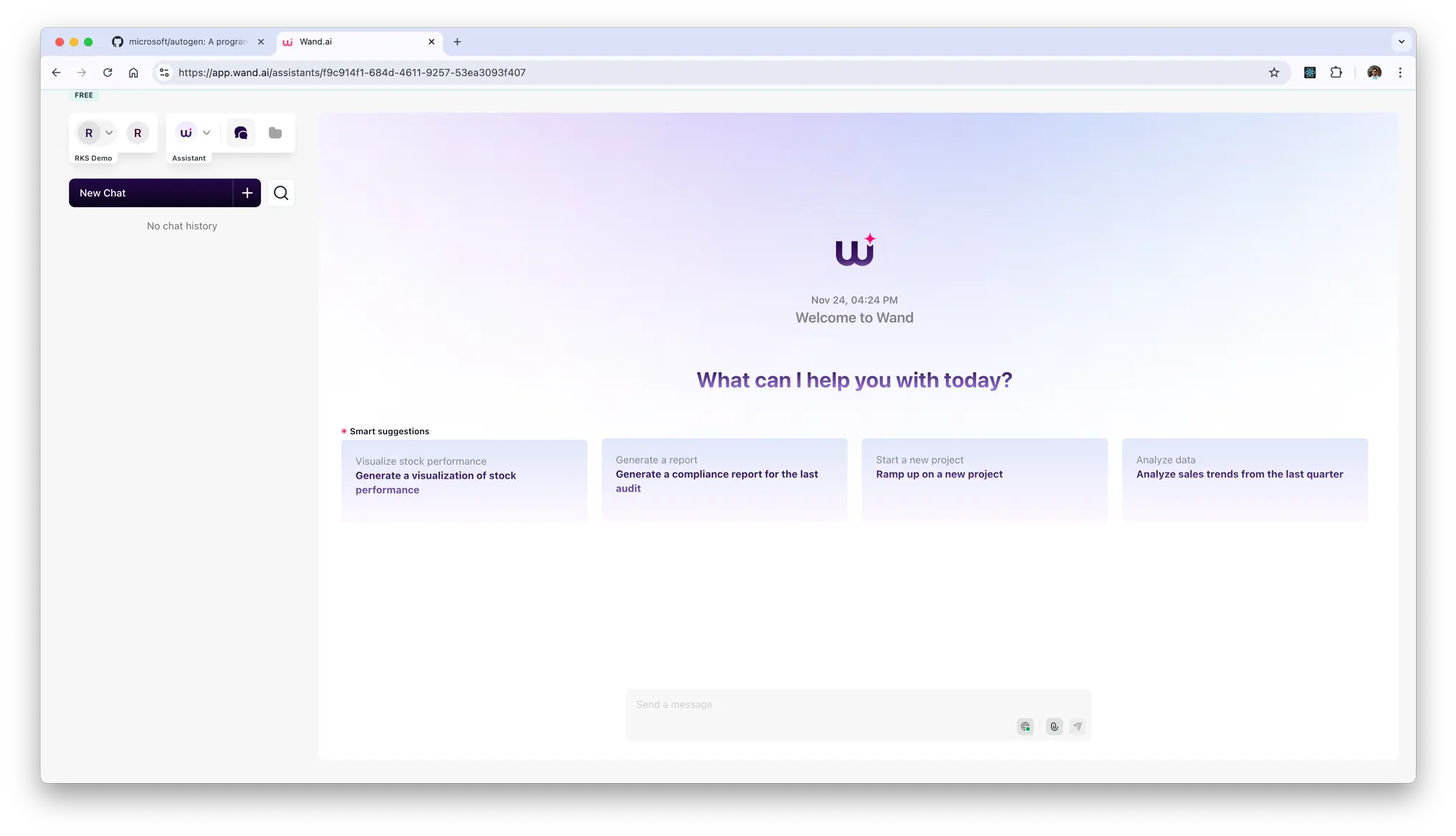
I contributed to the engineering of Wand.ai's Wandy assistant, connecting the user-facing product to tool execution, retrieval and cloud infrastructure. The work brought together Kubernetes, Google Cloud serverless services, Next.js and several data systems.
These are the engineering lessons I took from that work.
Retrieval connects the assistant to business knowledge
Enterprise questions often depend on documents and policies outside the model. Retrieval-augmented generation supplies the relevant information to the response workflow. The important part is connecting the right knowledge to the task, with retrieval that can be inspected when an answer fails.
Tool execution changes how you manage context
Code execution, search and multi-step workflows add information to a conversation quickly. We used summarization and task tracking to retain useful context and keep the assistant focused on the work in progress.
Multi-agent workflows need explicit coordination
The tools ranged from internet search, email and calendar operations to LaTeX-based PDF reports. A report could involve separate agents working on sections before combining the output. The orchestration has to connect those tasks and their results.
Event-driven infrastructure keeps execution separate from the interface
Tasks and queues supported the Google Cloud Functions workflows and allowed work to proceed independently of the frontend. Kubernetes provided a separate execution environment for tool services. The architecture connected those execution paths to the assistant experience.
The work behind the lessons
My thanks to the Wand.ai team and Rotem Alaluf for the opportunity to contribute. The Wand.ai case study describes my assistant, cloud and deployment work. The CoinQuant case study covers a separate application of multi-agent orchestration to trading-strategy generation.