Next.js, Python and gRPC for AI Applications
Published
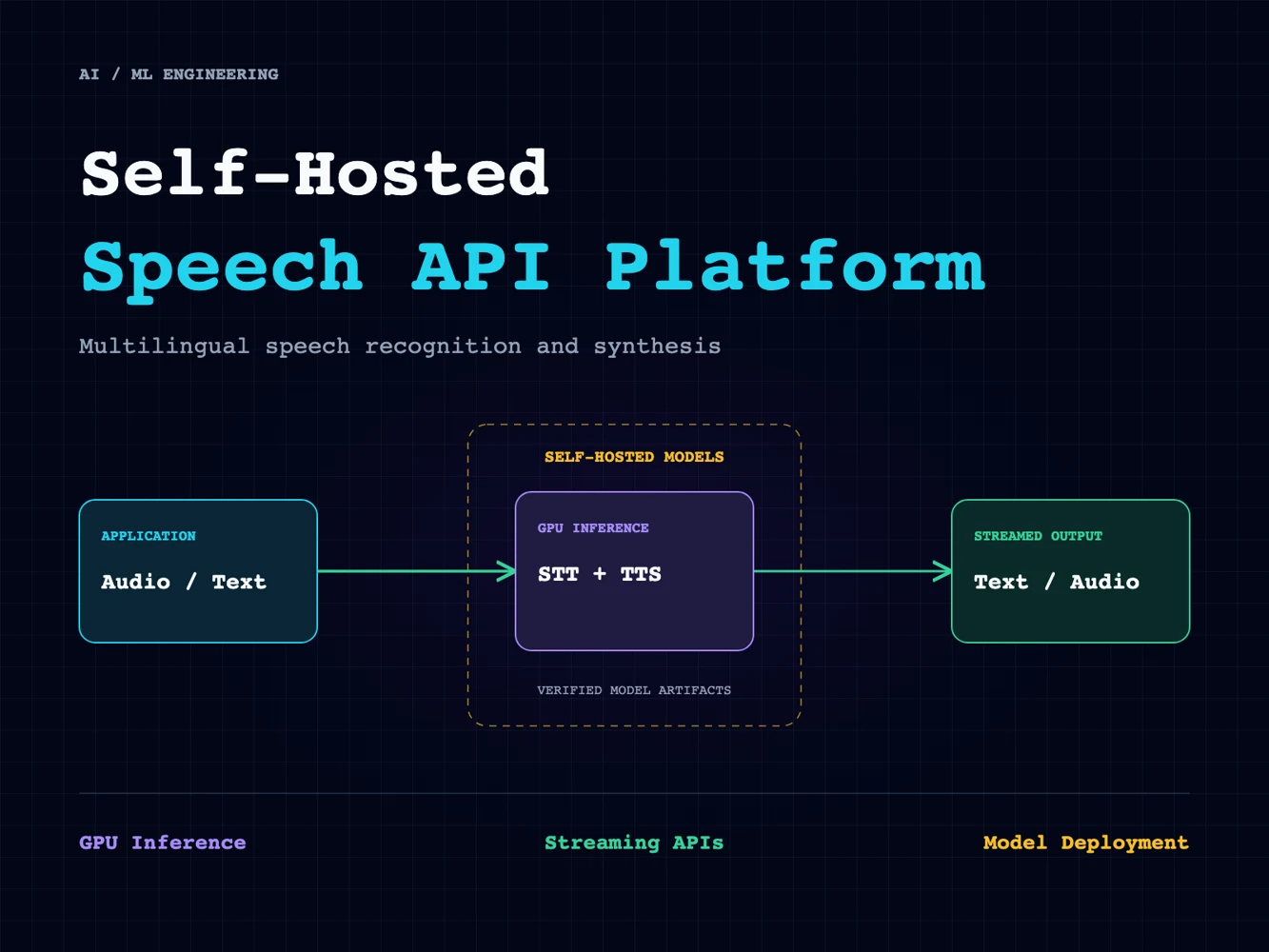
After working on AI applications with different requirements, I found a useful division of responsibilities: Next.js for the web product and Python for model and agent workflows. gRPC connects services where typed contracts and streaming are useful.
Next.js for the application
Next.js provides the React-based interface and application layer. I use it to connect navigation, product workflows and backend capabilities in a web application. The user interface and the model runtime have different responsibilities, and this separation keeps that boundary visible.
Python for models and agents
Python gives the model and agent services access to the machine-learning ecosystem. It is the layer where I work with model inference, training libraries and orchestration code. That service can evolve without forcing every model concern into the web application.
gRPC for service boundaries
I value gRPC for explicit API contracts, support for bidirectional streams and libraries in both Python and Node.js. Those capabilities are useful when two services need a defined message boundary and an ongoing exchange of data.
Treat the stack as a pattern
The broader pattern is to choose the application layer for its platform and connect it to model services through clear boundaries. The frontend can change with the target platform while the model-serving responsibilities remain separate.
For a complete example of application and inference engineering, see Swarit voice AI. My GPU inference services cover the model-serving side of that boundary.